
Video & News



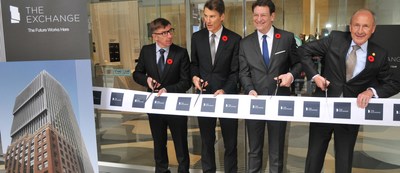

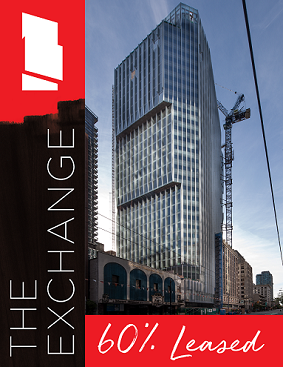
The Exchange Vancouver Old Stock Transformation
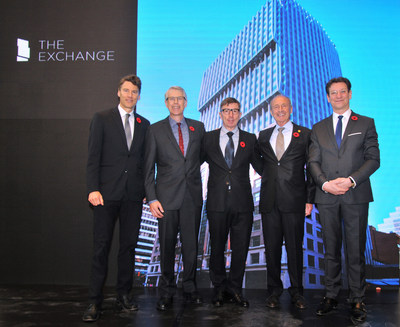
The Exchange converts Vancouver’s Old Stock Exchange into a 31-storey mixed use tower designed by Swiss architect Harry Gugger and developed by Credit Suisse and SwissReal. The project seeks to align with City of Vancouver climate goals and British Columbia CleanBC priorities by drastically reducing operational carbon, preserving cultural heritage, and enhancing downtown density near transit. Primary sustainability targets include net reductions in operational energy intensity, a minimum 50 percent reduction in greenhouse gas emissions compared with current code, and certification ambitions aligned with high performance standards used in North American commercial buildings.
Key goals are:
- Maximize retention of the sandstone trading hall and masonry façades while adding vertical office and residential floors.
- Achieve high occupant wellbeing through daylighting, fresh air delivery, and acoustic separation.
- Integrate on-site renewables and passive measures to lower peak loads and operational costs.
Site, urban fit and architectural intent
Located within Vancouver’s historic financial district, the project sits on a compact downtown lot with access to Burrard Street transit and pedestrian corridors. The design by Harry Gugger respects the urban grain by maintaining street scale, restoring ornamented façades, and inserting a crystalline tower that reads as contemporary yet contextual. The approach preserves visual corridors and activates the ground plane with public lobbies and retail that support local businesses.
Heritage retention focuses on the original exchange hall and primary elevations. Structural reinforcement allows the old masonry envelope to be seismically upgraded and integrated into a new core, enabling adaptive reuse while meeting modern seismic design standards prevalent in Vancouver and British Columbia.
Design strategies and systems integration
Adaptive reuse is the backbone of the strategy. The original trading hall becomes a civic lobby and amenity, while new floors above are built on a lightweight steel frame to reduce foundation loads and embodied carbon. The envelope is a high performance glazed curtain wall with thermally broken frames, low emissivity coatings, and operable windows on selected floors to enable natural ventilation during temperate months.
Passive design principles reduce heating and cooling demand. South and west façades are shaded with fixed fins and deep reveals to control solar gain. Increased thermal mass is provided by exposed concrete slab where feasible to damp diurnal temperature swings. Continuous exterior insulation behind restored masonry reduces thermal bridging at intersections between old and new fabric.
Energy systems combine a high efficiency central heat pump plant with thermal energy storage and heat recovery ventilation. Rooftop photovoltaic arrays feed building loads and offset common area energy. A building management system orchestrates set points, demand response, and fault detection to sustain performance and to support Vancouver’s grid balancing initiatives. Daylight modelling informs floor plate depths and glazing ratios to optimize natural light without glare. Interior shading and frit patterns reduce direct sun while preserving views to the harbor.
Material choices emphasize low embodied carbon and circularity. Structural steel with high recycled content, mass timber in secondary framing where fire strategy allows, and specification of cement substitutes in concrete mixes target lower upfront emissions. Reclaimed stone from the original building is reused in lobbies and terraces. Local suppliers from the Lower Mainland are prioritized to cut transport emissions and support regional economies.
Water, landscape and biodiversity
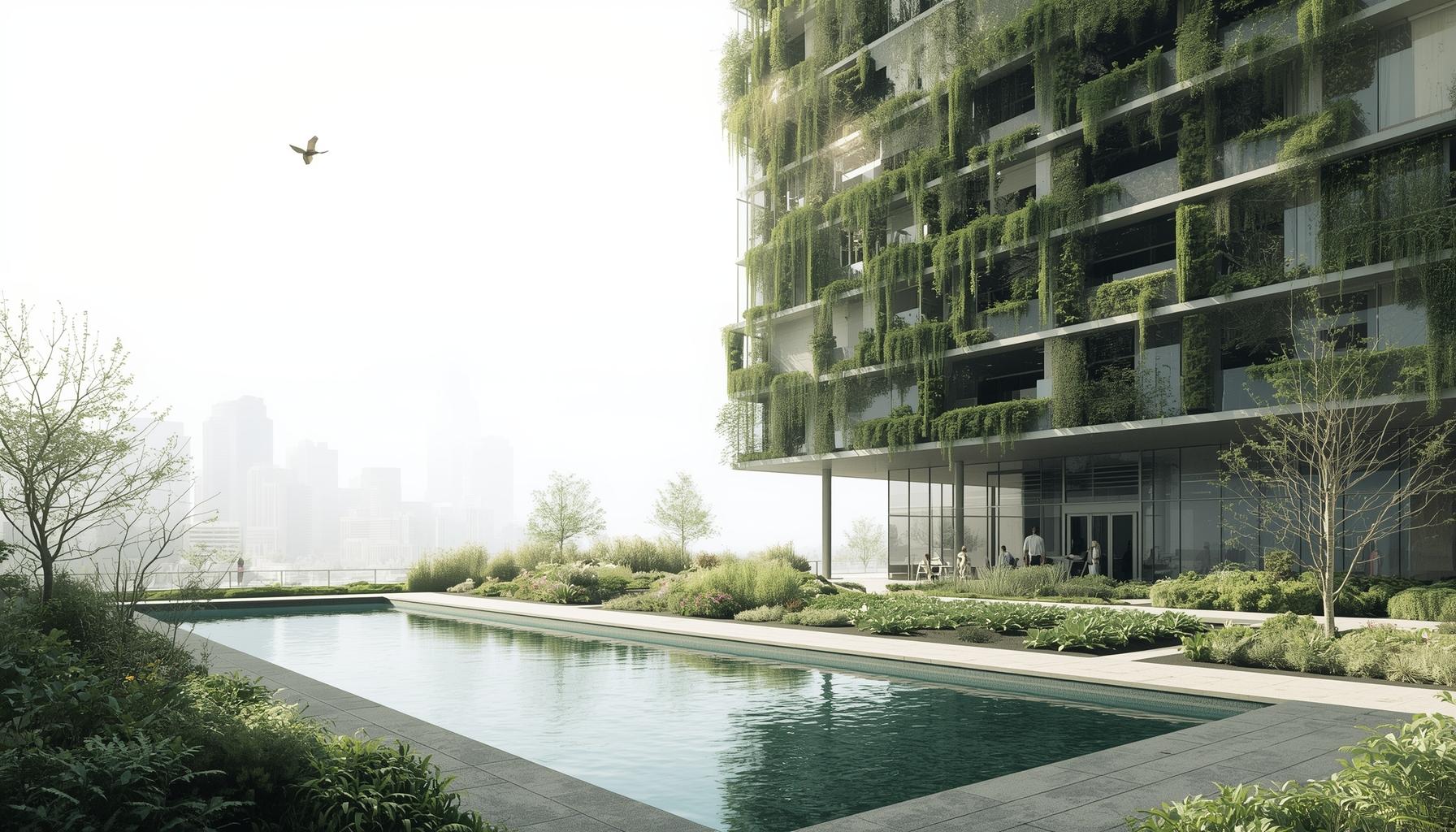
Water use reduction is achieved through low flow fixtures, dual flush systems, and greywater reuse for toilet flushing in non potable zones. A rainwater capture system supplies irrigation for planted terraces and for cooling tower make up where local codes permit. Stormwater attenuation is addressed through permeable paving at sidewalks, subsurface storage tanks sized for 25 year storm events, and vegetated swales that improve water quality before release into municipal systems.
Green roofs and planted terraces are woven into the tower to extend habitat corridors and reduce roof heat island effect. Native species from Metro Vancouver plant lists are used to support pollinators and minimize irrigation. Landscape design also moderates microclimate around pedestrian areas, improving thermal comfort in summer and reducing wind tunnel effects at street level.
Performance, lifecycle, economics and social value
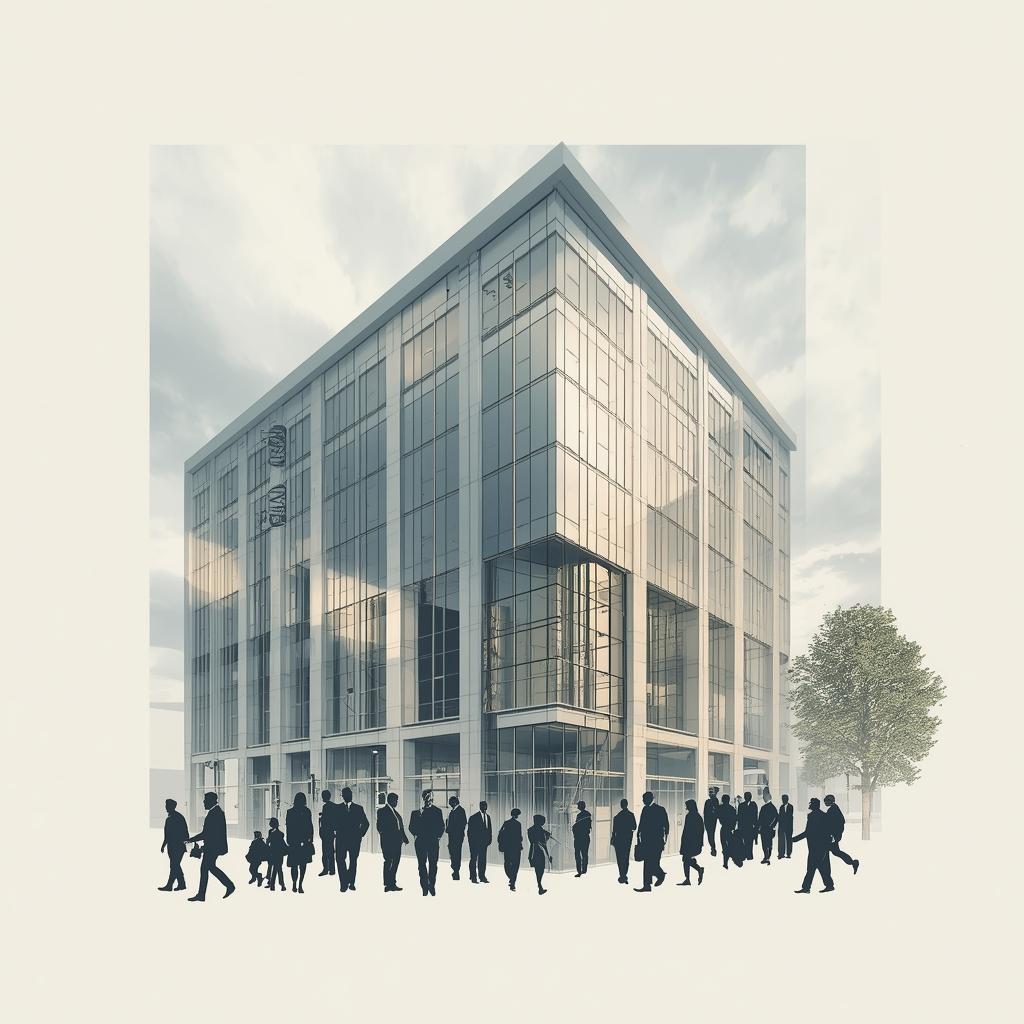
Operational strategies include rigorous commissioning, continuous monitoring, and post occupancy evaluation to verify energy and comfort outcomes. Acoustic treatments and zoned HVAC ensure thermal and acoustic comfort for mixed program floors. Waste minimization during construction prioritizes on site separation, contractor take back for packaging, and salvage of existing materials. Whole building lifecycle assessment informs design choices to reduce global warming potential across 60 year scenarios.
Below is a summary of predicted performance metrics, certification aims and simple payback estimates for major sustainable features. The figures reflect conservative regional assumptions and standard practice for downtown Vancouver commercial retrofits.
Operational maintenance strategies emphasize ease of access, component replacement, and clear lifecycle responsibilities for developers and future owners. Long term cost benefits derive from reduced energy bills, lower utility volatility, and enhanced asset value tied to sustainability credentials.
Community value is generated through restored heritage fabric, publicly accessible ground floors, and improved streetscape. Challenges included integrating old masonry with a tall new frame, meeting stringent seismic and energy performance simultaneously, and balancing preservation with floor area efficiency. Innovations that proved effective were modular steel erection above the preserved façade and early contractor involvement to maximize salvage.
Replicability hinges on the paired strategies of heritage retention plus compact high performance tower inserts. The model demonstrates that downtown heritage buildings in temperate coastal climates can be revitalized to deliver modern performance while preserving cultural identity. Long term resilience is fostered through flexible floor plates, robust service corridors, and monitoring that allows tuning as technology and regulation evolve.